Atlas Data Fabric
Enterprise data migrations die in spreadsheets. Atlas makes the mapping governed, queryable and agent-ready.
- MCP
- Databricks
- Desktop app
The problem
Enterprise data migrations die in spreadsheets. A typical programme runs 18–24 months along a critical path: unified data model, field mapping, ETL, data quality and reconciliation, then go-live system by system. The knowledge that path depends on lives in Excel mapping sheets, wikis and people’s heads. Specs go stale, semantic errors surface only at reconciliation, and every mismatch sends the team back to ETL, the most expensive rework loop in the programme. And nobody can say with confidence who decided what, and on whose authority.
What it does
Atlas replaces the spreadsheets with one governed workspace that engineers, architects, business analysts and AI agents all work in together. Business domains and concepts are linked to the source and target schemas that implement them. Every mapping and transformation rule records who proposed it, when, why, and how confident they were.
It is also the programme’s governance and control point. Humans and agents have feature parity, but not authority parity: an agent can do everything a person can do in Atlas (explore, propose, flag conflicts, draft rules) but only people with the right role can approve, and every approval is attributed. What Atlas holds once approved is the specification the ETL is built from.
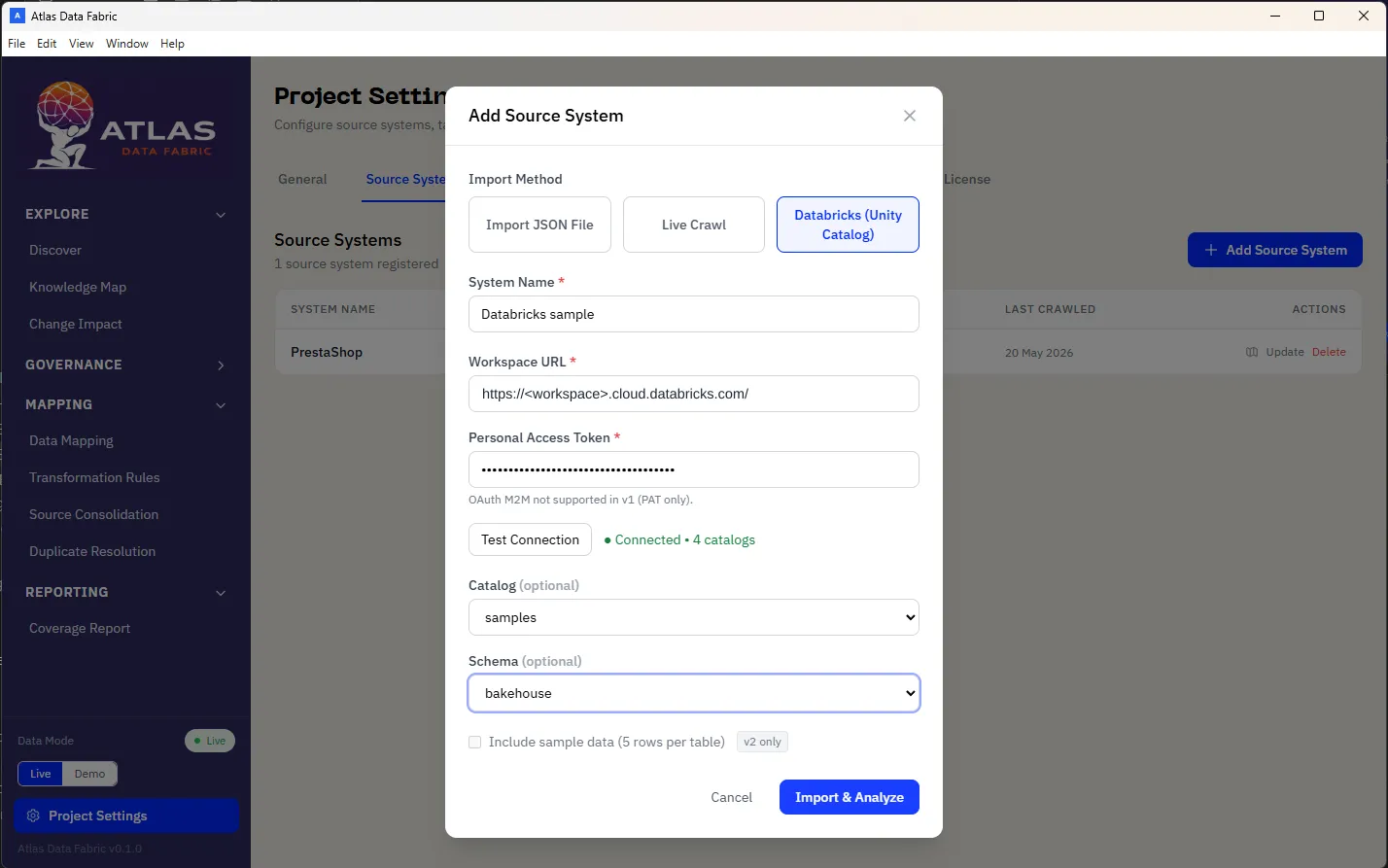
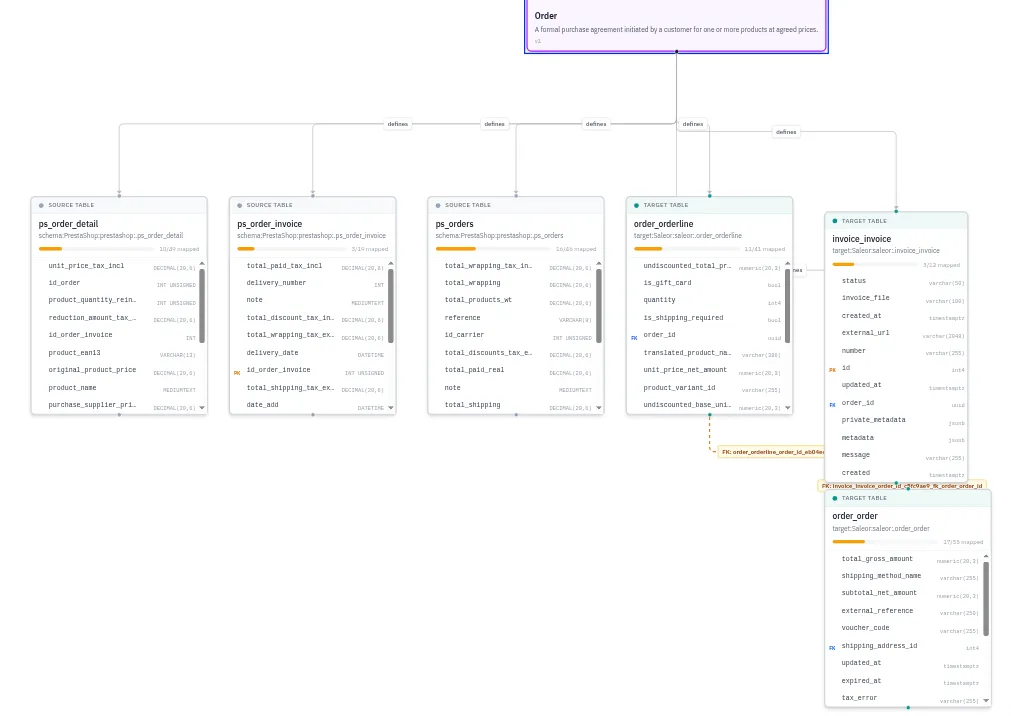
- Agents propose, humans decide. Agents propose mappings with confidence scores. The score routes each one to auto-approval, standard review or mandatory review, so expert attention goes where it matters, and the approval rules themselves are set by people.
- The source of ETL specs. Approved mappings and transformation rules are the single specification for the pipelines. When a rule changes, the spec changes in one place, with its history.
- Coverage is a query, not a status meeting. Unmapped targets, conflicts between systems and duplicates are visible at any moment.
- Sign-off from evidence. The sign-off pack, with coverage gates and its audit trail, is generated from Atlas rather than assembled by hand.
- A view per role. Table views for analysts, a structural view for architects, a review inbox and sign-off view for governance.
- Local-first. It runs on the team’s own machines, and migration data stays where it is.
Where it stands
In use in enterprise migration delivery. Atlas is proprietary: I designed and built it for Itera. Contact me or Itera to set up a team that establishes a data migration factory for your enterprise, with substantial productivity gains in enterprise data migrations and in data warehouse (DWH) workloads.
Data migration challenges without Atlas and agentic migration
Example enterprise data migration timeline
3 source systems → unified data model → 3 target systems · 18–24 months
- Discovery & assessment months 1–5
- Unified data model design months 3–10 model freeze
- Field mapping specification months 5–14
- ETL development & testing months 8–17
- Data quality & reconciliation months 11–20 semantic errors surface here · ↺ back to ETL
- Go-live, system by system months 17–24
- critical path
- parallel
- reconciliation
- go-live
- Excel chaos. Mapping specs live in spreadsheets and go stale as they circulate.
- Rules buried in legacy code. Undocumented business rules and environment gaps break ETL between dev and prod; every fix is a multi-day cycle.
- The rework loop. Old and new systems run in parallel for months, and every reconciliation mismatch goes back to ETL: the most expensive loop in the programme.
Workstreams overlap heavily: coordinating the parallel tracks is a major hidden cost.